How to Escape an Upside-Down Car Loan
A clear guide to understanding negative equity and the best ways to get your car loan back on track
By Dori Zinn
6 min. read
What Does It Mean to Be Upside-Down on a Car Loan?
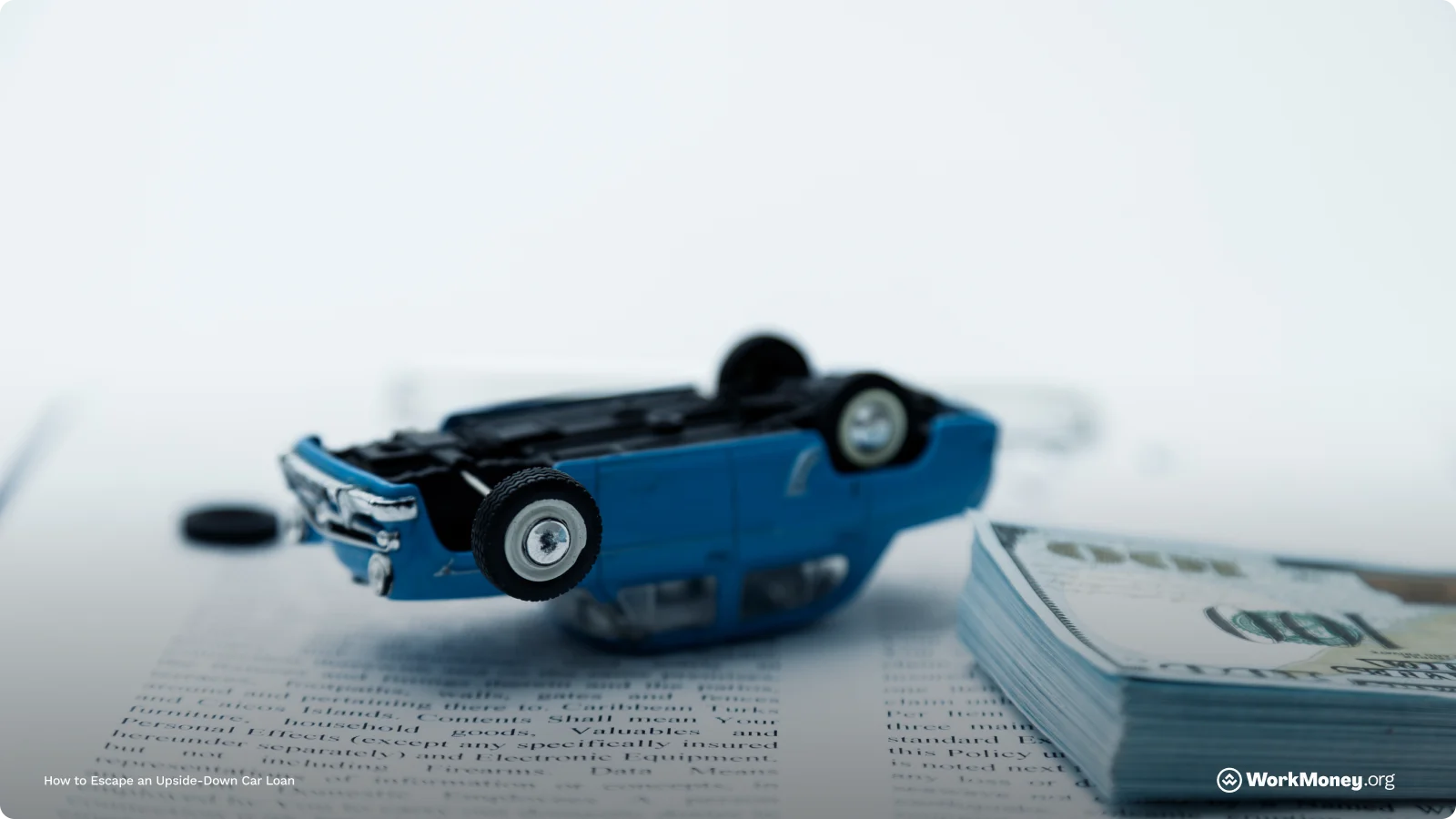
Being upside-down on a car loan means that what you owe on your car loan is more than the value of your car. Say you owe $25,000 on your car, but now it’s worth $15,000. Your car’s value is less than what you’ll pay for it.
Becoming upside-down on your car loan can happen for any number of reasons. First, most cars lose value over time. According to Kelley Blue Book, new cars drop 55% in value after five years of ownership. According to Experian, you’ll lose 10% in the first month.
Depreciation happens because of age, mileage, condition, and demand. A vehicle with active warranties is more likely to hold a higher value compared to a car of the same make and model without.
Car loans can also go upside down with:
Low monthly payments with longer repayment terms
A very low or no down payment
Higher interest rates
What Happens With a Car That’s Upside Down?
If you’re paying for a car with an upside-down car loan, you’ll have a lot of trouble recouping the investment you’ve already made in it. If you’re losing money, you may not be as inclined to trade in your car or sell it.
Selling or trading in your car might be necessary if you need to have a more reliable car or you’re looking for ways to lower your car payment. But remember, you won’t get what you paid for it — you’ll get its projected value.
How to Calculate Negative Equity
You can find your car’s negative equity by checking how much you have left to pay on your car loan. Check your loan statement to see the most recent balance, looking for the loan payoff value.
Then check the value of your car based on its current condition. You can use different calculators like those from Kelley Blue Book, Edmunds, or the National Automobile Dealers Association (NADA) to determine how much your car is worth.
Once you have both, subtract your car’s value from what you owe. If you owe $17,000 but your car is worth $15,000, your negative equity is $2,000.
How to Get Out of an Upside-Down Loan
It’s unlikely you’ll regain what you paid for your car before you finish paying off your loan. While you can keep up your payments as is, it might not be the right financial decision. If your car is underwater, you have a few options to handle an upside-down car loan.
How to Prevent Being Upside Down in the Future
Before falling upside-down on another car loan, try avoiding it by:
Making a larger down payment on your car.
Shortening repayment terms by opting for 36 or 48 months.
Avoid rolling over old car loans into new ones.
Buy used cars or find ones with slower depreciation.
Explore gap insurance, or insurance that protects you from depreciation, in case your car gets stolen or totaled and is deemed a total loss.
The Bottom Line
Being stuck in an upside-down car loan can feel like there’s no way out. And while it might take some time to break free, there are ways you can escape it. While not all options are right for everyone, see which works best for your financial situation.
DISCLAIMER:
*This information is estimated based on consumers whose auto refinance loan funded through Caribou between 7/1/2025 and 9/30/2025, had an existing auto loan on their credit report, and selected a loan offer to reduce their monthly payment. These borrowers saved an average of $151 per month, with annualized savings of $1,812 per year. Refinance savings may result from a lower interest rate, longer term, or both. There is no guarantee of savings. Your actual savings, if any, may vary based on interest rates, the repayment term, the amount financed, and other factors.
Was this information helpful?
About the Author

Dori Zinn
Dori Zinn is a longtime personal finance journalist with nearly 20 years of experience in digital media. Her work has been featured in the New York Times, Wall Street Journal, CBS News, Yahoo, CNN, USA Today, and more. She loves helping folks learn about money. If she isn’t writing, she’s reading, baking, or watching football.